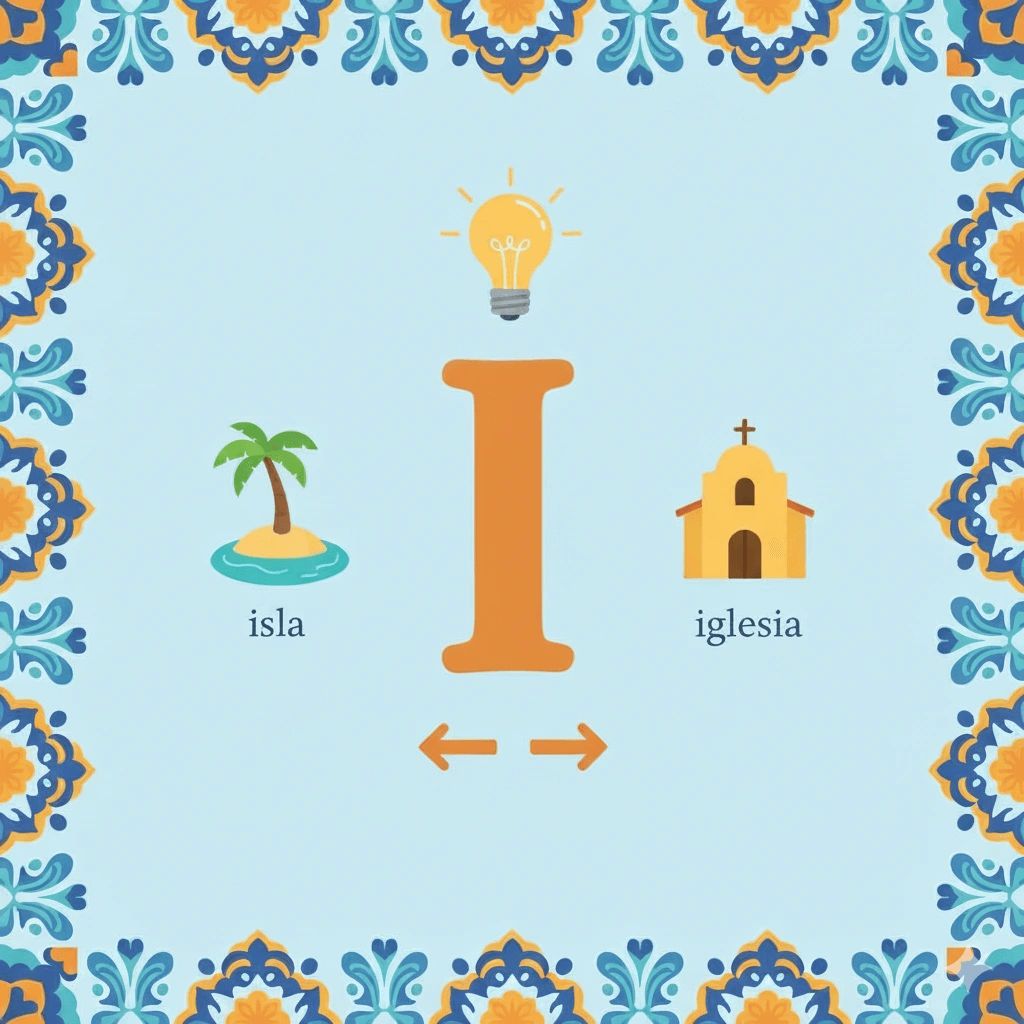
Learning Spanish doesn't have to feel overwhelming. Sometimes, the best way to build confidence is by mastering simple, everyday words you'll actually use. Today, we're exploring easy Spanish words that start with "I", a collection of practical vocabulary that'll help you communicate more naturally and understand Spanish conversations better.
Whether you're planning to travel to one of the best Spanish speaking countries or simply want to expand your language skills, these words will become essential building blocks in your Spanish journey.
Why Focus on Words Starting with I?
Spanish words beginning with "I" appear frequently in everyday conversation. From greeting someone to describing your feelings, these words help you express yourself in countless situations. Plus, many of them sound similar to their English counterparts, making them easier to remember and pronounce.
Essential Spanish Words Starting with I
Isla (Island)
Pronunciation: EES-lah
This is one of those beautiful words you'll hear often when discussing travel destinations. "La isla es hermosa" means "The island is beautiful." If you're exploring facts about Spanish speaking countries, you'll discover that many Spanish-speaking nations boast stunning islands worth visiting.
Importante (Important)
Pronunciation: eem-por-TAHN-teh
This cognate is easy to remember because it looks just like "important" in English. Use it to emphasize anything significant: "Es muy importante" (It's very important). You'll use this word constantly in professional and personal conversations.
Inglés (English)
Pronunciation: een-GLEHS
Ironically, you'll need this word when telling people you speak English! "Hablo inglés" means "I speak English." It's particularly useful when traveling or meeting new Spanish-speaking friends.
Información (Information)
Pronunciation: een-for-mah-see-OHN
Another helpful cognate. Need directions? Ask "¿Dónde puedo encontrar información?" (Where can I find information?). This word appears on signs, websites, and in conversations everywhere.
Ir (To Go)
Pronunciation: eer
This is one of the most essential verbs in Spanish. It's irregular, but the present tense forms are straightforward: "Yo voy" (I go), "Tú vas" (You go), "Él/Ella va" (He/She goes). You'll say things like "Voy a la tienda" (I'm going to the store) multiple times daily.
Iglesia (Church)
Pronunciation: ee-GLEH-see-ah
Whether you're religious or simply admiring architecture, "iglesia" is a word you'll encounter often. Spanish-speaking countries are home to some of the world's most stunning churches and cathedrals.
Igual (Equal/Same)
Pronunciation: ee-GWAHL
Use "igual" to express similarity or equality. "Es igual" means "It's the same," while "igual que" means "same as" or "just like." It's incredibly versatile in daily conversation.
Idea (Idea)
Pronunciation: ee-DEH-ah
Another easy cognate! "Tengo una idea" (I have an idea) is a phrase you'll use constantly. The pronunciation differs slightly from English, with emphasis on the second syllable.
Izquierda (Left)
Pronunciation: eez-kee-EHR-dah
Essential for navigation! "A la izquierda" means "to the left." When asking for directions, you'll hear this paired with "derecha" (right). This word can be tricky to pronounce at first, but practice makes perfect.
Idioma (Language)
Pronunciation: ee-dee-OH-mah
Perfect for language learners! "Estudio el idioma español" means "I study the Spanish language." It's a great word to know when discussing your language-learning journey.
Everyday Expressions with I Words
Increíble (Incredible)
Pronunciation: een-kreh-EE-bleh
Express amazement with this word! "¡Qué increíble!" (How incredible!) is an enthusiastic way to respond to good news or impressive experiences.
Interesante (Interesting)
Pronunciation: een-teh-reh-SAHN-teh
Another useful cognate for expressing interest. "Es muy interesante" (It's very interesting) works in countless situations, from museum visits to dinner conversations.
Invierno (Winter)
Pronunciation: een-vee-EHR-no
One of the four seasons. "En invierno hace frío" means "In winter it's cold." When discussing weather or travel plans, you'll need the seasons in your vocabulary.
Invitar (To Invite)
Pronunciation: een-vee-TAR
Social situations call for this verb. "Te invito a cenar" means "I invite you to dinner." It's a friendly, welcoming word that helps you connect with others.
Practical I Words for Daily Life
Incluir (To Include)
Pronunciation: een-kloo-EER
Useful in many contexts: "El precio incluye desayuno" (The price includes breakfast). Whether shopping, dining, or planning activities, this verb comes in handy.
Imaginar (To Imagine)
Pronunciation: ee-mah-hee-NAR
Let your creativity flow! "No puedo imaginar" means "I can't imagine." It's perfect for expressing disbelief or wonder.
Iniciar (To Begin/Start)
Pronunciation: ee-nee-see-AR
Great for talking about starting new projects or activities. "Voy a iniciar clases de español" (I'm going to start Spanish classes) might be exactly what you're planning!
Instituto (Institute)
Pronunciation: een-stee-TOO-toh
Educational contexts require this word. We've been helping students at our institute since 1988, providing quality language instruction that gets real results.
Pronouns and Common Small Words
Yo (I)
Pronunciation: yoh
The subject pronoun "I" in Spanish. While Spanish often omits subject pronouns because verb conjugations indicate the subject, "yo" adds emphasis: "Yo hablo español" (I speak Spanish). Understanding pronoun usage, like knowing the difference between me vs mi in Spanish, is crucial for clear communication.
Words for Describing Things
Inmediato (Immediate)
Pronunciation: een-meh-dee-AH-toh
When something needs to happen right away, use this word. "Es inmediato" (It's immediate) conveys urgency or promptness.
Imposible (Impossible)
Pronunciation: eem-poh-SEE-bleh
Express impossibility with this cognate. "Es imposible" (It's impossible) works the same way as in English, making it easy to incorporate into your speech.
Inteligente (Intelligent)
Pronunciation: een-teh-lee-HEHN-teh
Compliment someone's smarts! "Eres muy inteligente" (You're very intelligent) is a kind thing to say.
Building Your Spanish Vocabulary Systematically
Learning words alphabetically might seem random, but it's actually an effective memorization technique. When you group words by their starting letter, you create mental categories that make recall easier. Just like we explored easy Spanish words that start with W, focusing on specific letter groups helps you build vocabulary in manageable chunks.
Tips for Remembering I Words
Create Associations: Link Spanish words to English cognates. "Importante" and "important" are nearly identical, making them easy to remember.
Use Context: Don't just memorize isolated words. Create sentences. Instead of simply learning "isla," practice saying "Quiero visitar una isla tropical" (I want to visit a tropical island).
Practice Pronunciation: Spanish pronunciation is generally consistent, but some sounds differ from English. The double "l" in "increíble" sounds like a "y" in most Spanish dialects, so it's pronounced "een-kreh-EE-bleh."
Make Flashcards: Write the Spanish word on one side and the English translation on the other. Review them daily, and pay special attention to words you struggle with.
Speak Out Loud: Reading words silently isn't enough. Pronounce them aloud to train your mouth and ears. This builds muscle memory and improves your accent.
Why Structured Learning Makes All the Difference
While learning individual words is valuable, nothing beats structured instruction that ties everything together. At Tampa Language Center, our experienced educators use proven methods to help students at every level. We've been teaching Spanish and English since 1988, and we understand exactly what works.
Our Spanish program covers vocabulary, grammar, pronunciation, and cultural context, everything you need to communicate confidently. Whether you're preparing for travel, enhancing your career prospects, or simply pursuing a personal passion, we offer flexible class options that fit your schedule.
Ready to take your Spanish beyond basic vocabulary lists? Our Spanish lessons in Sarasota provide immersive, interactive learning experiences that transform your language skills faster than self-study ever could. We offer group classes for collaborative learning, semi-private sessions for focused attention, and private lessons tailored to your specific goals. Plus, our evening and Saturday classes make it easy to learn no matter how busy your schedule.
Connecting Words to Real-World Use
Understanding individual words is just the beginning. The real magic happens when you start combining them into natural phrases and sentences. For instance:
- "Voy a la iglesia" (I'm going to church)
- "La información es importante" (The information is important)
- "Hablo inglés y español" (I speak English and Spanish)
- "Tengo una idea increíble" (I have an incredible idea)
- "La isla es interesante" (The island is interesting)
These simple combinations show how quickly your vocabulary compounds. With just a handful of words, you can express complete thoughts and participate in real conversations.
Beyond Vocabulary: Cultural Context Matters
Learning words in isolation only gets you so far. Understanding how native speakers actually use these words in context makes all the difference. For example, "igual" can mean "equal," but in conversation, you might hear "Me da igual" (I don't care/It's all the same to me). That's a nuance you won't find in a dictionary.
This is where guided instruction becomes invaluable. Our teachers bring real-world experience and cultural knowledge to every lesson, helping you understand not just what words mean, but when and how to use them appropriately.
Keep Building Your Spanish Foundation
Mastering these easy Spanish words that start with "I" gives you a solid foundation, but language learning is a continuous journey. Each new word you learn connects to others, creating a web of understanding that deepens with practice and exposure.
The words we've covered today, from basic verbs like "ir" to useful adjectives like "importante" and "interesante", will serve you in countless situations. Combined with words from other letter groups, you're building a comprehensive vocabulary that enables real communication.
Remember, consistency matters more than intensity. Studying for 15 minutes daily beats cramming for two hours once a week. Make Spanish part of your daily routine: label items around your house, think in Spanish during your commute, or practice with language exchange partners online.
Your Next Steps in Spanish
Whether you're just starting out or looking to advance your existing skills, Tampa Language Center is here to help. We've spent over 35 years perfecting our teaching methods, and our track record speaks for itself. Our students go on to study at universities, advance in their careers, and build meaningful relationships across cultures.
For those seeking more than casual learning, we can also assist with visa applications and status changes. Our dedicated DSOs and PDSOs navigate the complexities of U.S. immigration law, making the process much smoother, even under the current administration. We've helped countless international students achieve their educational dreams in the United States.
Learning Spanish opens doors to 21 countries where it's the official language, plus countless communities around the world. It enriches travel experiences, enhances career opportunities, and connects you with over 500 million Spanish speakers globally.
Start with these simple "I" words, practice them daily, and watch how quickly your confidence grows. Before long, you'll be stringing together sentences, understanding native speakers, and expressing yourself with increasing fluency. ¡Buena suerte! (Good luck!)