Learning Spanish can feel overwhelming when you're staring at endless vocabulary lists, but here's some good news: Spanish words that start with "W" are surprisingly manageable! While the letter "W" isn't native to Spanish, modern Spanish has adopted numerous words from other languages, making this an exciting category to explore.
Whether you're just starting your Spanish journey or looking to add some unique words to your existing vocabulary, mastering these "W" words will give you confidence and help you sound more natural in conversations. Let's dive into the most useful and easy Spanish words that start with "W", you'll be surprised how quickly you can add these to your daily Spanish practice!
Why Learning Spanish Words Starting with "W" Matters
The letter "W" holds a special place in Spanish vocabulary. Originally absent from the Spanish alphabet, it entered through borrowed words from English, German, and other languages. This makes "W" words particularly interesting because they often represent modern concepts, technology, and international culture.
Understanding these words is crucial for several reasons:
- They appear frequently in contemporary Spanish media
- They're essential for discussing technology and modern life
- They help you connect with younger Spanish speakers
- They demonstrate cultural exchange between languages
Easy Spanish Words That Start With W
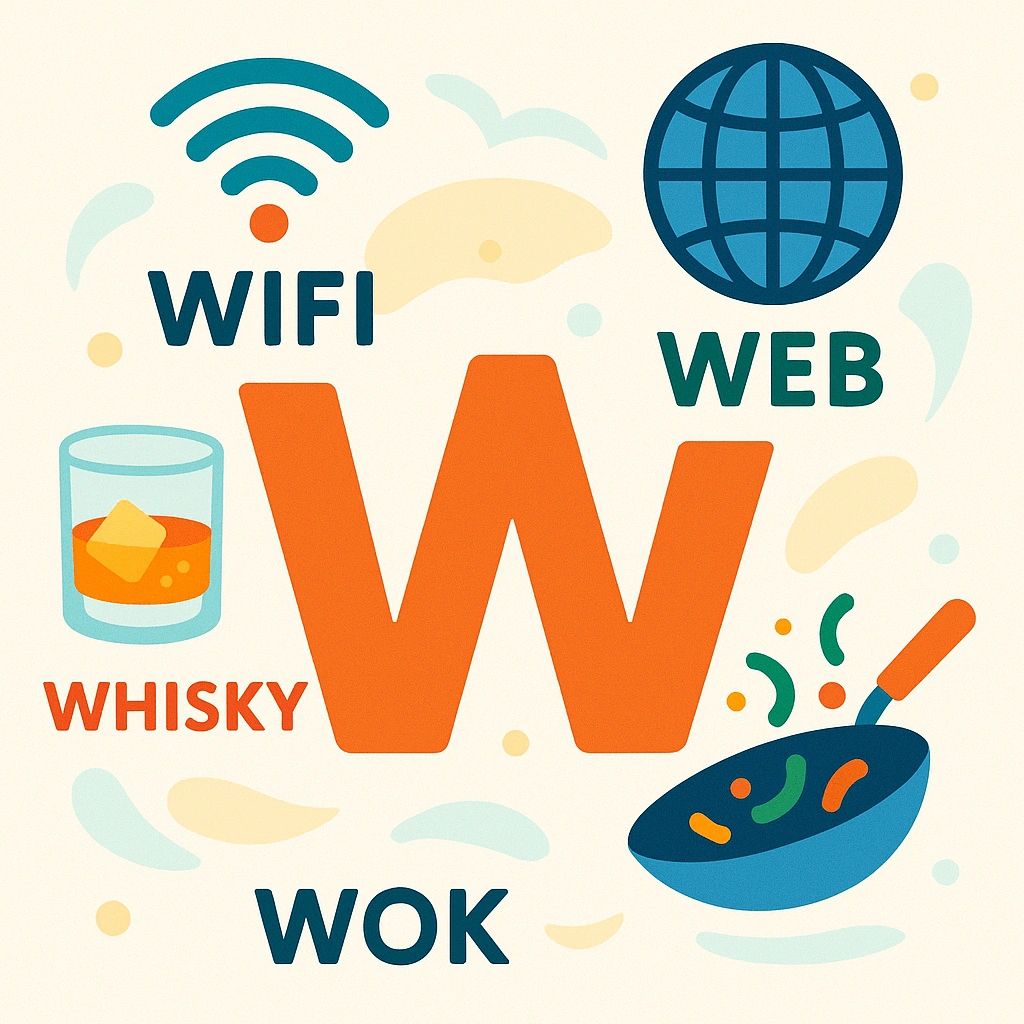
Web (pronounced "web")
Meaning: Website or the World Wide Web
Example: "Visita nuestra web para más información" (Visit our website for more information)
This word is identical in both Spanish and English, making it one of the easiest to remember. It's used extensively in digital contexts and is pronounced exactly as you'd expect.
Wifi (pronounced "wee-fee")
Meaning: Wireless internet connection
Example: "¿Tienes la contraseña del wifi?" (Do you have the wifi password?)
Every traveler needs this word! Whether you're visiting one of the best Spanish speaking countries to visit or just chatting with Spanish-speaking friends, "wifi" is universally understood.
Wok (pronounced "wok")
Meaning: A round-bottomed cooking pan
Example: "Voy a cocinar verduras en el wok" (I'm going to cook vegetables in the wok)
This cooking term has been adopted into Spanish kitchens worldwide, especially as Asian cuisine gains popularity in Spanish-speaking countries.
Whisky (pronounced "whiskey")
Meaning: Whiskey (alcoholic beverage)
Example: "Me gusta el whisky escocés" (I like Scottish whisky)
Note the slight spelling difference: Spanish uses "whisky" while English typically uses "whiskey." This is one of those subtle details that shows your attention to authentic Spanish usage.
Western (pronounced "western")
Meaning: Western (movie genre or relating to the American West)
Example: "Mi película favorita es un western" (My favorite movie is a western)
This word is particularly useful when discussing movies, books, or cultural topics. It's one of many entertainment-related terms that have crossed language barriers.
Intermediate Spanish "W" Words
Windsurf (pronounced "wind-surf")
Meaning: Windsurfing
Example: "Practico windsurf en la playa" (I practice windsurfing at the beach)
Perfect for describing water sports and beach activities, essential vocabulary when discussing leisure activities in coastal Spanish-speaking regions.
Walkman (pronounced "walkman")
Meaning: Portable cassette player
Example: "En los años 80, todos tenían un walkman" (In the 80s, everyone had a walkman)
While technology has moved beyond the walkman, this word appears in nostalgic conversations and historical contexts.
Windsurfista (pronounced "wind-sur-fee-sta")
Meaning: Windsurfer (person who windsurf)
Example: "Es un windsurfista experimentado" (He's an experienced windsurfer)
Notice how Spanish adds the suffix "-ista" to create the noun for the person who does the activity. This follows Spanish word formation patterns perfectly.
Advanced and Specialized "W" Words
Warrant (pronounced "warrant")
Meaning: Financial warrant
Example: "El warrant está disponible en el mercado" (The warrant is available in the market)
This financial term is crucial for business Spanish and economic discussions.
Wat (pronounced "wat")
Meaning: Buddhist temple
Example: "Visitamos un wat en Bangkok" (We visited a wat in Bangkok)
While specialized, this word appears in travel and cultural contexts, especially when discussing Southeast Asian culture.
Waterpolo (pronounced "water-polo")
Meaning: Water polo Example: "Juego waterpolo en el equipo universitario" (I play water polo on the university team)
Sports terminology often crosses language boundaries, and this is a perfect example of international sporting vocabulary.
Tips for Mastering Spanish "W" Words
1. Practice Pronunciation
Most Spanish "W" words maintain their original pronunciation, but with a slight Spanish accent. The key is to pronounce them clearly while maintaining the Spanish rhythm and flow.
2. Context is Key
Since these are borrowed words, they're often used in specific contexts. Pay attention to when and where native speakers use them.
3. Watch for False Friends
Some "W" words might look familiar but have subtle differences in usage or meaning. For example, "web" in Spanish specifically refers to websites, while in English it can have broader meanings.
4. Use Them in Conversation
The best way to internalize these words is through active use. Try incorporating one new "W" word into your Spanish conversations each week.
Common Mistakes to Avoid
Overusing English Pronunciation
While these words are borrowed from other languages, they should still follow Spanish pronunciation rules. Don't make them sound too English when speaking Spanish.
Assuming Universal Understanding
Not all Spanish speakers may be familiar with every borrowed word. Be prepared to explain or use alternatives when necessary.
Ignoring Gender Rules
Remember that borrowed words still follow Spanish grammar rules. "La web" (feminine) and "el whisky" (masculine) demonstrate how these words are assigned gender in Spanish.
Building Your Spanish Vocabulary Beyond "W" Words
Learning these "W" words is just the beginning of your Spanish vocabulary journey. Understanding the difference between fundamental concepts like me vs mi in Spanish will help you use these new words correctly in sentences.
As you expand your vocabulary, you'll discover fascinating facts about Spanish-speaking countries and gain deeper cultural insights that make language learning more meaningful.
Take Your Spanish Learning to the Next Level
Mastering vocabulary is just one piece of the Spanish learning puzzle. While these "W" words will definitely impress your Spanish-speaking friends and colleagues, building true fluency requires structured learning, consistent practice, and expert guidance.
At Tampa Language Center, we understand that every student learns differently. Our experienced instructors don't just teach you words. They help you understand how to use them naturally in real conversations. Whether you're interested in mastering business Spanish for your career, preparing for travel, or simply exploring a new culture, our Spanish classes (we offer optional private Spanish lessons too) are designed to accelerate your progress while keeping learning enjoyable and engaging.
Our Spanish program covers everything from basic pronunciation to advanced conversation skills, and we'll help you master not just vocabulary but also the cultural nuances that make the difference between sounding like a textbook and sounding like a native speaker. Plus, if you're planning to study in the United States, our experienced DSOs and PDSOs can help you navigate the visa process, making your educational journey smoother even with the current immigration requirements.
Your Spanish Journey Starts Here
Learning Spanish words that start with "W" might seem like a small step, but it's actually a perfect example of how languages evolve and adapt. These borrowed words represent the dynamic, living nature of Spanish, it's not just an ancient language, but a modern, growing form of communication used by over 500 million people worldwide.
Every word you learn brings you closer to fluency and opens doors to new cultural experiences, professional opportunities, and meaningful connections. Whether you're planning to travel, advance your career, or simply challenge yourself intellectually, mastering Spanish vocabulary like these "W" words is your gateway to a richer, more connected world.
Remember, consistency beats perfection. Start using these words in your daily Spanish practice, and don't be afraid to make mistakes, they're an essential part of the learning process. With dedication and the right guidance, you'll soon find yourself confidently using these words in natural, flowing Spanish conversations.
¡Buena suerte! (Good luck!)